Straat Museum

Why visit

Who will love it

Prioritize STRAAT if you want to see the world's largest collection of street art in a massive industrial hangar. It is a refreshing, high-energy alternative to the traditional Museumplein galleries, offering a raw look at global urban culture that feels distinctly modern.

Who should skip it

You might skip this if your schedule is tight and you prefer staying within the canal belt, as the trip to NDSM Wharf requires a ferry ride. It is also less suitable for those who strictly seek classical Dutch masters or find vast, unheated industrial spaces uncomfortable.

What to know beforehand

The scale of STRAAT is its most defining feature, utilizing 8,000 square meters of industrial space to showcase murals that would be impossible to house in a traditional gallery. Since the museum is located in a raw, unheated warehouse, the internal temperature reflects the outdoors; dressing in warm layers is a practical necessity for a comfortable visit.

This experience is ideal for those who value urban culture and the evolution of graffiti into fine art, though it may feel too remote for visitors on a tight schedule. The journey requires a free 15-minute ferry ride from Centraal Station, making it a commitment that rewards those looking for Amsterdam's grittier, contemporary edge.

Local Insight: Visit the panoramic deck on the upper floor to appreciate the sheer scale of the largest works and get a bird's-eye view of the entire hall.

🎫 Tickets, tours & discounts

Which ticket to choose

For most visitors, the standard entrance ticket is the only requirement. It provides full access to the massive 8,000-square-meter warehouse and its collection of over 150 giant murals. There are no complex tiers or VIP packages, as the museum's open-plan layout ensures everyone sees the same art.

Paying for a specific time slot is mandatory, so the primary choice is simply ensuring you have a confirmed booking before taking the ferry.

  • Standard Adult: The baseline for all visitors 19 and older.
  • Youth/Student: A discounted rate for those aged 13–18 or with a valid student ID.
  • Children: Free entry for those under 13, making it a budget-friendly stop for families.

One common mistake is arriving without a digital booking on weekends. While the space is vast, the museum strictly monitors capacity, and you may be turned away at the door if the current hour is fully booked.

Best time to visit

To capture the best photos without other visitors in your frame, arrive exactly at 10:00 AM on a weekday.

The industrial scale of the NDSM warehouse means that even with a crowd, the museum rarely feels cramped, but the morning light filtering through the high windows provides the most natural illumination for the murals.

If you visit in the late afternoon, you can pair the museum with the vibrant sunset views at the NDSM wharf’s waterfront bars.

ImportantThe museum is housed in a former shipyard warehouse without central climate control. In winter, it can be quite cold inside, so keep your coat on. In summer, the building can get warm, so mornings are preferable for a more comfortable temperature.

Combos and discounts

The most effective way to save is by using the I am Amsterdam City Card, which includes full entry to STRAAT. If you are visiting multiple museums like the Rijksmuseum or the Rembrandt House, this card pays for itself quickly.

There are no resident-only discounts, but the free entry for children under 13 is a significant saving compared to other major Amsterdam attractions.

If you are looking for a combo, look for packages that include a canal cruise departing from the nearby NDSM pier or tickets to the NXT Museum located a short distance away in Amsterdam North. Since the ferry from Amsterdam Centraal to NDSM is free for everyone, you do not need to factor transport costs into your budget.

When to consider a guided tour

A guided tour is worth the extra cost if you want to move beyond just looking at the scale of the art. The guides explain the specific subcultures, the difference between illegal graffiti and commissioned street art, and the technical challenges of painting canvases that are ten meters high.

If you are a casual fan, the wall plaques provide enough context for a self-guided walk.

However, if you are interested in the stories of the international artists or the history of the NDSM wharf itself, the 45-minute 'Gallery Talk' or a private tour adds a layer of narrative that you cannot get from the visual display alone.

For photographers and solo travelers, a self-guided visit at your own pace is usually sufficient.

Weather nowOvercast sky · Light haze
Amsterdam, The Netherlands
NowOvercast ☁️
Temperature23°C
VisibilityModerate
AerosolsLight haze · AOD 0.26

Conditions are mixed — plan accordingly and check for covered areas.

AOD — how much dust and haze in the air dim the distant view. 0 clean, >0.4 noticeable, >0.7 heavy.

Crowd indicator

Crowds are generally manageable due to mandatory booking, with peak times occurring on weekends and during the afternoon.

When to go?

Mini-calculator based on crowd levels by day and time.

Best time at Mon — 18:00

This day is usually calmer than average. This slot has a higher chance of a comfortable visit: compromise between light and visitor flow. Weather is currently not ideal: overcast ☁️.

30–50% · Quiet60–80% · Moderate90–100% · Crowded

Nearest days

TodayModerate crowds expected today, peaking in the early afternoon.
10:0030%
12:0060%
14:0080%
16:0070%
17:0050%
18:0040%
TomorrowSimilar crowd patterns expected tomorrow with peak times around midday.
10:0030%
12:0060%
14:0080%
16:0070%
17:0050%
18:0040%
Day after tomorrowConsistent visitor flow expected, booking ahead is recommended.
10:0030%
12:0060%
14:0080%
16:0070%
17:0050%
18:0040%

How to find the entrance

1
NDSM FerryBoard the free F4 ferry from Amsterdam Centraal and exit at the NDSM Wharf.
2
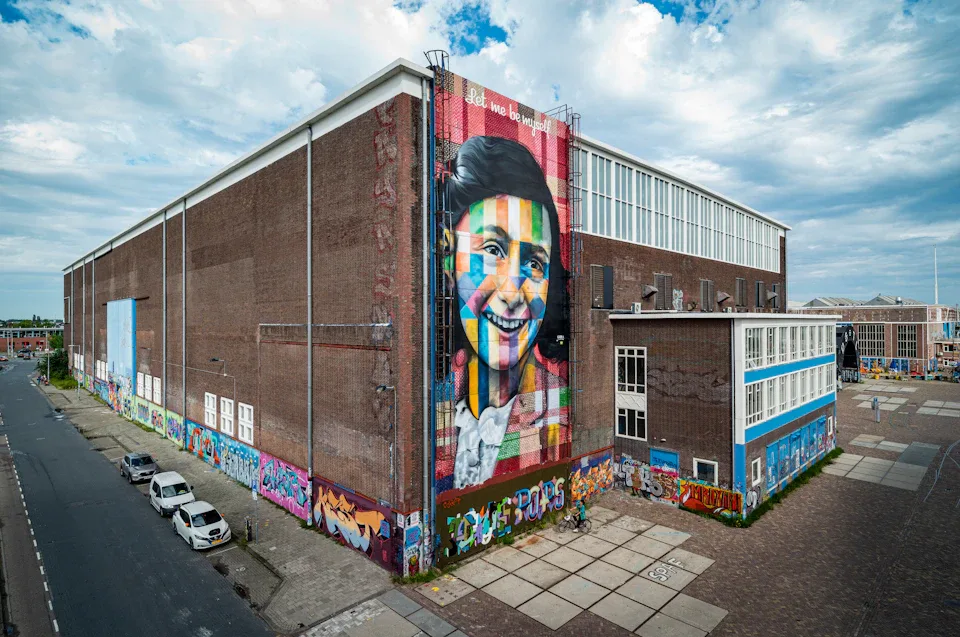
Warehouse ApproachWalk five minutes past the Crane Hotel toward the building with the Anne Frank mural.
3
Main DoorsLocate the entrance marked with the museum name directly beneath the street art facade.
4
Reception DeskEnter the lobby to have your digital ticket scanned at the primary check-in counter.

To reach the museum, take the free F4 ferry from the waterfront side of Amsterdam Centraal station toward NDSM. The boat ride takes approximately 15 minutes. Once you disembark at the NDSM wharf, walk straight ahead for about five minutes, passing the crane hotel on your right, until you see the massive warehouse building.

The entrance is located directly under the giant, multi-colored mural of Anne Frank. You will enter through the glass doors into a lobby area. While the museum is spacious, you should account for a few minutes at the entrance for ticket scanning and the mandatory bag check.

  • The ferry departs every 15 to 30 minutes; missing one is the primary reason visitors arrive late.
  • All bags larger than an A4 sheet of paper must be stored in the free self-service lockers.
  • The warehouse is a massive industrial space and can be chilly, so it is recommended to keep your coat with you.
ImportantMake sure to board the ferry specifically marked for NDSM, as other ferries departing from the same area go to different locations in Amsterdam Noord.

Practical limits & what to bring

The museum is located in a massive former shipping warehouse at the NDSM Wharf, which retains an industrial atmosphere. Because of the building's sheer size and high ceilings, internal temperatures can fluctuate with the season; wearing layers is highly recommended to stay comfortable while walking the floor.

The entire exhibition space is wheelchair accessible, with elevators available to reach the panoramic gallery on the upper level.

  • No food or drinks are allowed inside the exhibition hall.
  • Professional photography gear, including tripods, gimbals, and drones, is prohibited.
  • Flash photography is not permitted.
  • Large umbrellas and oversized backpacks must be stored before entering.
  • Small handbags and compact backpacks are allowed inside.

Free lockers are provided near the entrance for coats and small personal items. These lockers typically require a 1 EUR coin for operation, which is returned after use.

The museum cannot store large suitcases or travel luggage; these should be left at luggage points at Amsterdam Central Station before boarding the ferry. Strollers are fully permitted inside the museum, and the wide, flat aisles of the warehouse make it one of the most stroller-friendly cultural venues in the city.

Take the free F4 ferry from behind Amsterdam Central Station to NDSM. The ride takes about 15 minutes and drops you within a short walk of the museum entrance.

Location and what's nearby

About the area

  • A spacious, post-industrial shipyard district on the northern banks of the IJ river, characterized by massive warehouses, shipping containers, and outdoor art installations.
  • The vibe is raw, creative, and alternative, attracting artists, local families, and travelers looking to escape the crowded historic center.
  • It is ideal for a relaxed day out combining street art, waterfront strolls, vintage shopping, and casual dining at creative outdoor venues.

Nearby on foot (up to 15 minutes)

  • NDSM Loods — A massive former hangar now housing artist studios and creative workshops · 2 min walk
  • Faralda Crane Hotel — A monumental harbor crane converted into a luxury three-suite hotel · 3 min walk
  • IJ-Hallen — The largest flea market in Europe hosted inside historic industrial hangars · 4 min walk
  • Nieuw Dakota — A contemporary art space showcasing temporary exhibitions by local artists · 5 min walk
  • Blast Galaxy — A retro arcade club where entry grants unlimited play on classic games · 8 min walk

15–30 minutes by transport

  • Eye Filmmuseum — A striking waterfront museum dedicated to cinema history and film exhibitions · 12 min by taxi
  • A'DAM Lookout — An observation deck offering panoramic views and a high-altitude swing · 12 min by taxi
  • This is Holland — A flight simulator experience showcasing Dutch landscapes from a unique perspective · 12 min by taxi
  • Museum Het Schip — An architectural landmark showcasing the expressive brickwork of the Amsterdam School · 15 min by taxi

Where to eat nearby

  • Pllek — organic dishes served in a waterfront shipping container cafe · mid-range · booking recommended · 5 min walk
  • IJver Amsterdam — Dutch comfort food and craft beer in a historic warehouse · mid-range · booking recommended · 1 min walk
  • Noorderlicht Café — seasonal organic meals in a bohemian greenhouse by the river · mid-range · walk-ins welcome · 6 min walk

Ready-made day itinerary

Start your day exploring the massive indoor street art collection at the STRAAT Museum. Afterward, wander through the creative studios inside the adjacent NDSM Loods and check out the towering Faralda Crane Hotel. Conclude your afternoon with a relaxed lunch of organic dishes at Pllek while enjoying the panoramic waterfront views of the IJ river.

NoteIf you plan to visit the IJ-Hallen flea market, align your trip with their monthly weekend schedule, as the surrounding wharf becomes exceptionally busy and vibrant during these dates.
Reference

Facts

Read more

Numbers and Scale

  • Total area: 8,000 square meters of indoor space, providing one of the world's largest dedicated platforms for urban art.
  • Ceiling height: 24 meters, which accommodates canvases as large as multi-story building walls.
  • Collection size: Over 160 massive artworks representing the work of more than 150 artists from around the globe.
  • Facade mural: The portrait of Anne Frank on the exterior covers 240 square meters of the building's surface.
  • Industrial heritage: The museum is housed in the Lasloods, a former ship welding hall that is a protected national monument.

Myths and Misconceptions

  • Myth: The artworks are pieces of walls cut out from the streets. In reality: Every piece was created specifically for the museum on-site to ensure the art is seen as intended.
  • Myth: STRAAT is a temporary gallery or a rotating pop-up event. In reality: It is a permanent museum with a curated collection that grows through a formal residency program.
  • Myth: The museum only focuses on traditional graffiti and tag art. In reality: The collection spans the entire street art movement, including stencils, 3D illusions, and abstract murals.

Rare and Unusual

  • The original metal tracks used to move massive ship parts are still embedded in the concrete floor throughout the gallery.
  • Artists often spend several weeks living and working inside the museum to complete their large-scale commissions.
  • The exterior Anne Frank mural, titled 'Let Me Be Myself', was created using exactly 450 spray cans and 30 liters of liquid paint.
  • A hidden mezzanine level offers a bird's-eye view of the entire hall, revealing the geometric layout of the massive canvases.
Background

History

Read more

STRAAT Museum is housed in the Lasloods, a former welding hangar at the NDSM Wharf that once served as one of the largest shipyards in the world.

After shipbuilding operations ceased in the 1980s, the abandoned industrial landscape of Amsterdam Noord naturally evolved into a haven for graffiti writers and street artists, laying the groundwork for the area's creative identity.

From Industrial Hangar to Canvas

The concept for the museum took shape when curators began collaborating with artists to bring the outdoor energy of the wharf inside the warehouse. Rather than importing pre-existing works, the museum invited international and local street artists to paint massive, site-specific canvases directly on-site, mirroring the monumental scale of public city walls.

Today, the cavernous 8,000-square-meter space preserves its raw industrial character, complete with steel beams and historic machinery. For visitors, this setting provides a unique opportunity to view street art at its intended scale and in its natural, gritty context, bridging the gap between transient street culture and a permanent gallery.

♿ Accessibility & families

STRAAT Museum is fully accessible for visitors with limited mobility. The exhibition is housed in a massive former industrial warehouse with level concrete floors throughout the main hall.

A large elevator provides access to the mezzanine gallery and the cafe, ensuring wheelchair users can view the oversized murals from both ground level and elevated vantage points.

Families with children are welcome, and the museum's spacious layout is ideal for strollers, which are permitted in all gallery areas. Children aged 12 and under receive free admission. Visitors under the age of 16 must be accompanied by an adult at all times.

Because the museum is located in an uninsulated industrial building, the indoor temperature fluctuates with the weather. It is recommended to wear warm layers during cooler months. Accessible restrooms and baby-changing facilities are located on the ground floor near the main entrance.

🏢 On-site amenities

On-Site Facilities

Restrooms and Accessibility Clean, modern restrooms are located on the ground floor near the entrance and within the cafe area. These facilities are free for all ticket holders and include dedicated accessible toilets. Baby-changing stations are available in the accessible restroom compartments.

STRAAT Cafe The museum features an on-site cafe situated on the mezzanine level. This elevated space offers a panoramic view of the massive canvases in the main hall. The atmosphere is casual and industrial, serving a selection of coffee, sandwiches, and warm lunch options.

It is an ideal spot to observe the scale of the artwork from a different perspective.

Museum Shop The shop at the exit focuses heavily on street art culture. Visitors can purchase high-quality art books, limited edition prints, and professional spray paint. They also stock a variety of branded apparel and unique souvenirs that reflect the NDSM wharf's creative heritage.

Connectivity and Water Free high-speed Wi-Fi is available throughout the warehouse. While there are no dedicated water fountains in the exhibition area, bottled water and other refreshments are sold at the cafe. Tap water in the restrooms is potable, as per standard Dutch regulations.

Reliability & freshness

UpdatedJune 20, 2026

I’ve lived in Amsterdam for seven years and write clear, practical guides to getting around the Netherlands without guesswork.