Who will love it
Price from: €18.00 Duration: 1 to 1.5 hours Best time: 10:00 AM on weekdays Booking required: Yes District: De Wallen
VerdictPrice from: €18.00 Duration: 1 to 1.5 hours Best time: 10:00 AM on weekdays Booking required: Yes District: De Wallen

Price from: €18.00 Duration: 1 to 1.5 hours Best time: 10:00 AM on weekdays Booking required: Yes District: De Wallen
Prioritize this museum if you want to experience the religious history of the Dutch Golden Age and step inside a remarkably preserved 17th-century home.
It is an ideal choice for travelers who appreciate intimate historical spaces, as the transition from a typical merchant's house to a fully realized, hidden Catholic church in the attic is both architecturally and historically fascinating.
Summary: A remarkably preserved 17th-century canal house concealing a grand Catholic church in its attic, showcasing the Dutch Golden Age's unique religious tolerance.
Body: The transition from a modest merchant's home to a grand, marble-clad chapel in the attic is one of the city's most striking architectural contrasts. The original 17th-century staircases are exceptionally steep and narrow, making the experience feel authentic but physically demanding.
Practical Note: Because of the steep, ladder-like stairs and lack of an elevator, this site is not accessible for travelers with limited mobility. It is a rewarding stop for history enthusiasts who value quiet, atmospheric preservation, but those seeking spacious, high-tech galleries may find the cramped layout restrictive.
Best time: Weekday mornings right at 10:00 AM to experience the quiet atmosphere before the midday crowds arrive.
Ticket block: Standard adult admission is EUR 18.00. Children aged 5 to 17 enter for EUR 7.50, and children under 5 enter for free. Entry is free for holders of the Museumkaart or the I amsterdam City Card.
Prime timing block: Allow 1 to 1.5 hours to fully explore the house and the attic church. The museum is open daily from 10:00 AM to 6:00 PM.
Our Lord in the Attic Museum
Amsterdam
EUR
The standard entrance ticket is the primary choice for most visitors and includes a high-quality audio guide as part of the price. There are no tiered "VIP" or "Fast Track" options because the museum is a historic canal house with limited capacity; everyone follows the same route through the narrow corridors and up the steep stairs.
A common mistake is arriving without a pre-booked time slot. Because the building is small and fragile, the museum strictly limits the number of people inside. Even if you have a Museumkaart, you should secure your entry time online to avoid being turned away during busy periods.
To experience the "hidden" atmosphere of the attic church, aim for the first hour after opening at 10:00 AM. Because the staircases are original and very narrow, the house can feel congested by mid-afternoon when tour groups and casual visitors peak.
Photographers should prioritize the morning light, which filters beautifully through the attic windows onto the marble-effect pillars. If you prefer a quieter experience, weekdays are significantly calmer than Saturdays and Sundays, when the surrounding Red Light District becomes much more crowded.
The museum is a staple inclusion in the I amsterdam City Card, making it a cost-effective addition for cardholders. For those paying out of pocket, there are no official bundled tickets with other museums, but its location makes it easy to pair with the Oude Kerk, located just a 2-minute walk away.
Children under the age of 5 enter for free, and there is a reduced rate for those aged 5 to 17. Students also receive a discount upon presenting a valid student ID.
For the vast majority of visitors, a live guided tour is unnecessary. The included audio guide is one of the best in Amsterdam, providing a clear narrative about the "schuilkerk" (hidden church) and the history of religious tolerance in the Netherlands.
It allows you to move at your own pace through the cramped quarters where a large group would feel intrusive.
A private guide only adds value if you are visiting in a group of 10 or more or if you have a specific academic interest in 17th-century Dutch architecture. Otherwise, the self-guided experience with the audio handset is perfectly sufficient to capture the emotional and historical weight of the site.
Expect cramped conditions during peak hours due to the historic building's narrow staircases.
Mini-calculator based on crowd levels by day and time.
This day is usually calmer than average. This slot has a higher chance of a comfortable visit: compromise between light and visitor flow. Weather is currently not ideal: overcast ☁️.
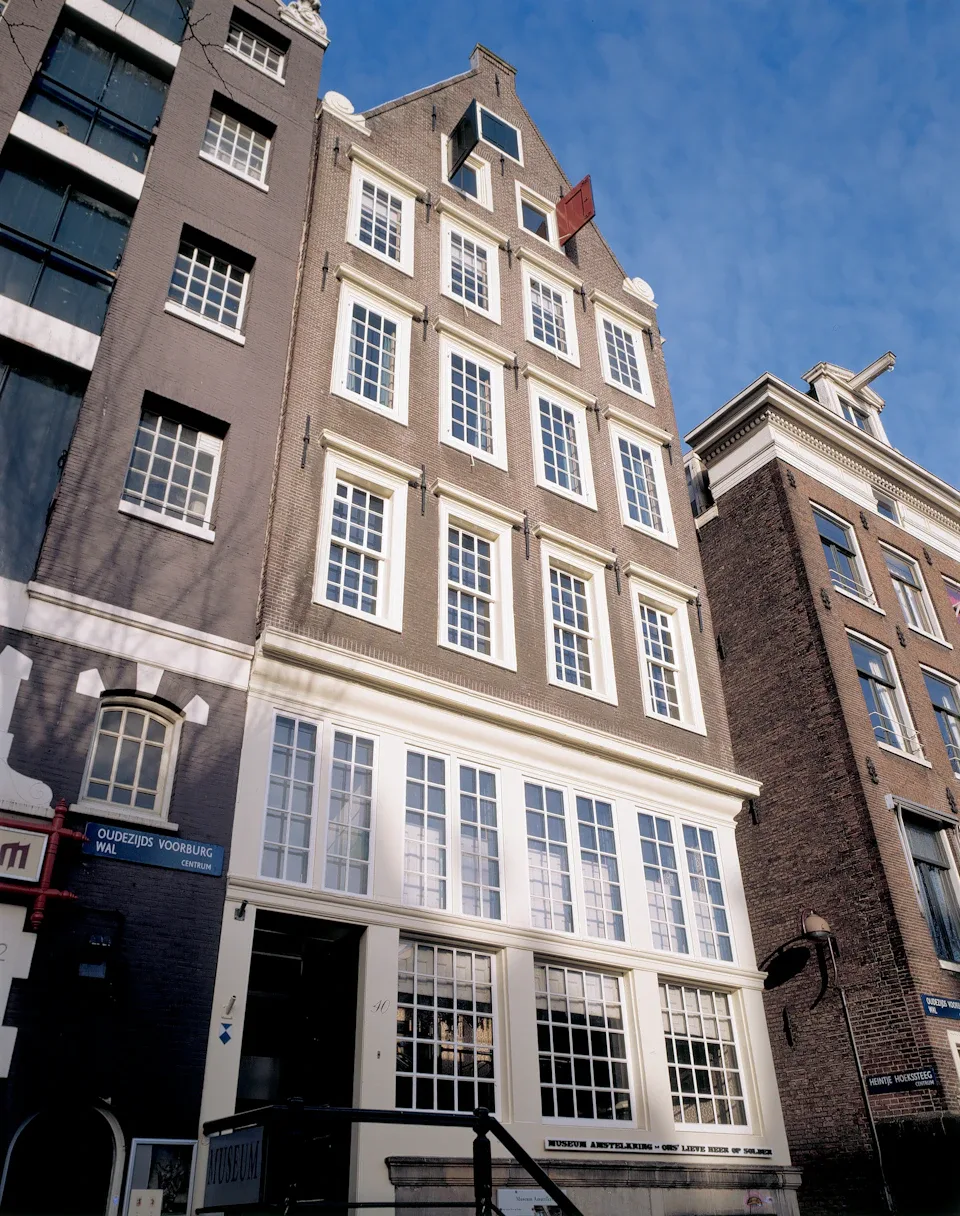
The museum entrance is located in a modern building at Oudezijds Voorburgwal 38. Do not look for a church door; instead, identify the glass-fronted reception area situated among the traditional canal houses. This modern wing serves as the gateway to the historic site and houses the ticket desk and cloakroom.
Before entering the historic house, you must leave all bags, umbrellas, and large coats in the free lockers located on the lower level. The passage into the museum itself is via an underground link that connects the new visitor center to the original 17th-century cellar.
The museum is housed in an authentic 17th-century canal house, which presents significant physical challenges. To reach the hidden church, you must climb several flights of exceptionally steep, narrow, and winding wooden staircases.
Due to these historical architectural constraints, the upper floors of the museum are not accessible to wheelchair users or those with limited mobility.
The interior spaces are cramped and can feel crowded during peak times. It is essential to wear sturdy, flat shoes; the original wooden steps are worn and can be difficult to navigate in high heels or slippery footwear.
Free lockers are located in the basement of the modern entrance building. These lockers are operated via a digital code and are sized for coats and small daypacks; they cannot accommodate large travel luggage or carry-on bags. If you have bulky luggage, you should use a storage service at Amsterdam Centraal station before your visit.
Strollers and prams are strictly prohibited inside the historic house because of the narrow passages and steep stairs. You must leave them in the designated parking area near the reception desk.
Start your morning at Amsterdam Centraal and walk through the historic Zeedijk to reach Our Lord in the Attic Museum while the streets are still quiet. After exploring the hidden church, enjoy a casual lunch at Nam Kee before heading to the Oude Kerk just across the water.
Spend your afternoon walking toward Dam Square to see the Royal Palace, then conclude the day with a canal-side dinner at Mata Hari as the district lights up.
Our Lord in the Attic Museum
Amsterdam, Netherlands
In the mid-17th century, merchant Jan Hartman converted the upper floors of his canal house into a secret Catholic chapel. Following the Reformation, public Catholic worship was banned in Amsterdam, forcing believers to build 'schuilkerken' or hidden churches.
This site is the most significant surviving example of these clandestine spaces, preserved exactly as it functioned centuries ago.
The building serves as a physical record of the Dutch tradition of tolerance. Although the authorities were aware of these hidden churches, they practiced a policy of looking the other way as long as the religious activity remained invisible from the street.
This pragmatic approach allowed different communities to live side-by-side during a period of intense religious transition.
Converted into a museum in 1888, it stands as the second oldest museum in the city. Visitors navigate narrow hallways and steep staircases to reach the attic, where the grand altar and gallery contrast sharply with the modest living quarters below. It remains a powerful symbol of religious freedom and the architectural ingenuity of the Dutch Golden Age.
Partial access; historic house requires climbing steep stairs.
Excellent for school-age children with dedicated audio tours and free admission for minors.
Our Lord in the Attic Museum presents a unique challenge for visitors with reduced mobility. While the modern entrance building is fully accessible and equipped with an elevator, the historic 17th-century canal house is not.
Reaching the famous attic church requires climbing several flights of original, narrow, and exceptionally steep wooden stairs. There is no lift or ramp access within the historic quarters.
For wheelchair users or those unable to navigate the stairs, the museum provides a high-quality virtual reality experience in the modern section. This allows guests to explore the attic church and the hidden rooms digitally from the comfort of the ground floor.
Due to the cramped corridors and vertical nature of the house, strollers are not permitted beyond the entrance hall. Parents must park strollers in the designated cloakroom area before starting the tour. Carrying infants in a front-facing baby carrier is the most practical option for navigating the stairs.
Children under the age of 18 enter the museum for free. Visitors under 12 years old must be accompanied by an adult at all times. To keep younger guests engaged, the museum offers a specialized 'Ladybird' audio tour and a discovery trail designed for children, making the history of the secret church accessible and entertaining for those under 12.
Modern restrooms are located on the basement level of the entrance building and are free for all ticket holders. This area also includes an accessible toilet and a baby-changing station.
While the modern wing is fully accessible via an elevator, please note that the historic house itself features very steep, narrow 17th-century stairs and is not wheelchair accessible.
The Museumcafé is situated in the modern entrance wing, offering a casual atmosphere with views of the Oudezijds Voorburgwal canal. It serves Dutch coffee, tea, and light snacks such as traditional apple pie.
For those looking for souvenirs, a small gift shop near the reception desk sells specialized history books, postcards, and decorative items inspired by the hidden church's interior.
Free Wi-Fi is available throughout the modern section of the museum. Small lockers are provided free of charge near the entrance for storing bags, umbrellas, and large coats, as these are not permitted inside the narrow corridors of the historic house.
While you may carry a small water bottle in the entrance area, consuming food or drinks is strictly prohibited within the historic rooms to protect the centuries-old interior.