National Maritime Museum

Why visit

Who will love it

Families and history enthusiasts should prioritize this museum for its immersive look into the Dutch Golden Age. The centerpiece is a full-scale replica of the merchant ship 'Amsterdam,' which offers a hands-on experience that brings maritime history to life more effectively than any standard gallery.

Who should skip it

Travelers on a tight schedule or those who prefer traditional art museums should consider skipping it. The facility is vast and requires a significant time investment to navigate, making it a heavy commitment if you are only in the city for a short stay.

What to know beforehand

The museum is a great fit for families and casual history buffs who appreciate interactive, multimedia exhibits and the chance to climb aboard the replica of the 18th-century cargo ship. However, travelers seeking a traditional, artifact-heavy archive may find the gamified displays light on academic depth.

The layout is also somewhat disjointed, requiring you to cross the central courtyard repeatedly to access the separate wings.

Access Tip: The replica ship features very steep, ladder-like stairs that are difficult for young children and inaccessible for wheelchairs. If mobility is a concern, focus on the main building's ground-floor galleries and the Royal Barge exhibit, which are fully accessible.

Adult admission is EUR 20, with free entry for Museumkaart or I Amsterdam City Card holders.

🎫 Tickets, tours & discounts

Which ticket to choose

A standard entry ticket is the only option most visitors need, as it provides full access to the main museum galleries, the historic Royal Barge, and the replica of the 18th-century sailing ship, the Amsterdam. There are no 'fast-track' or 'VIP' tiers because the museum uses a timed-entry system to keep crowds manageable.

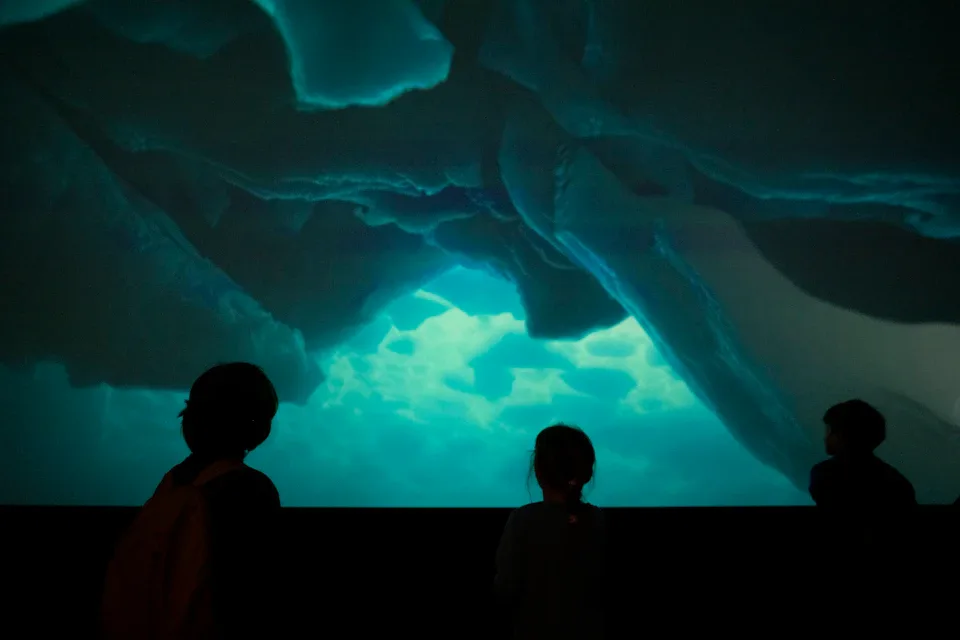
  • Standard Adult Ticket: Includes all exhibitions and the 'Dare to Discover' VR experience.
  • Youth/Student: Discounted rates for ages 4–17 and students with valid identification.
  • Children under 4: Free entry.

The most common mistake is assuming you can buy a ticket at the door and walk straight in. Online booking for a specific time slot is mandatory, even for pass holders, to ensure you can board the ship without a long wait.

Best time to visit

To experience the VOC ship Amsterdam without the crowds, aim for the first slot at 10:00 AM. This allows you to explore the narrow decks and the hold in relative silence before school groups arrive.

If you are more interested in the indoor art galleries and maritime maps, the late afternoon is significantly quieter and offers a more contemplative atmosphere.

For photographers, the glass-roofed inner courtyard is most impressive when the sun is directly overhead, casting geometric shadows. Families should avoid Wednesday afternoons, as local schools often have half-days, making the interactive exhibits much busier than usual.

Combos and discounts

The National Maritime Museum is a primary attraction included in the I amsterdam City Pass and the Museumkaart. If you have either, your entry is covered, but you must still reserve your arrival time on the museum's digital platform.

While there is no dedicated 'maritime-only' bundle, the museum is located next to the NEMO Science Museum. Visiting both on the same day is a popular choice for families.

If you are looking for further savings, keep in mind that the museum's library—one of the most important maritime libraries in the world—is free to visit, though it requires a separate appointment.

When a guided tour makes sense

For most travelers, a guided tour is not necessary. The museum provides a high-quality audio guide in multiple languages that covers the main highlights and the history of the Dutch East India Company. The exhibits are well-signposted in English, making self-exploration easy and rewarding.

A guided tour adds genuine value only if you are traveling in a large group or have a deep interest in specific technical aspects of naval history. For solo travelers and families, the freedom to wander the decks of the ship at your own pace usually outweighs the benefits of a structured tour.

Weather now
Amsterdam, The Netherlands
NowPartly cloudy 🌤️
Temperature16°C
VisibilityExcellent
AerosolsClean air · AOD 0.17

Good conditions for visiting today.

AOD — how much dust and haze in the air dim the distant view. 0 clean, >0.4 noticeable, >0.7 heavy.

Crowd indicator

Crowds are generally manageable due to timed entry tickets, with weekends and school holiday periods seeing the highest visitor numbers.

When to go?

Mini-calculator based on crowd levels by day and time.

Best time at Mon — 18:00

This day is usually calmer than average. This slot has a higher chance of a comfortable visit: compromise between light and visitor flow.

30–50% · Quiet60–80% · Moderate90–100% · Crowded

Nearest days

TodayModerate crowds expected, peaking in the early afternoon.
10:0035%
12:0070%
14:0085%
16:0050%
17:0025%
18:0010%
TomorrowSimilar moderate attendance with quieter morning and late afternoon slots.
10:0035%
12:0065%
14:0080%
16:0045%
17:0020%
18:0010%
Day after tomorrowSlightly busier heading into the weekend.
10:0040%
12:0075%
14:0085%
16:0055%
17:0030%
18:0015%

How to find the entrance

1
Arrival at KattenburgerpleinWalk fifteen minutes east from Centraal Station or take bus twenty-two to the museum stop.
2
Main Gate EntryCross the bridge and enter the historic naval storehouse through the central stone archway.
3
Central Glass CourtyardProceed into the Open Plein under the geometric glass roof to find the visitor hub.
4
Service DeskHead to the counters on the right for ticket scanning and mandatory locker storage.

The museum is a 20-minute walk from Amsterdam Centraal or a 5-minute trip on bus 22 or 43 to the Kattenburgerplein stop. The entrance is located through the large stone archway facing the square. Once inside, you will enter the Open Plein, a spectacular courtyard covered by a glass roof that serves as the starting point for all museum wings.

You must store all backpacks, large bags, and umbrellas in the basement lockers before entering the galleries. These lockers require a 1 EUR coin as a deposit, which is returned after use; if you do not have a coin, the staff at the information desk can provide a plastic token.

This stop is where most visitors lose time, especially during peak hours when the locker area becomes crowded.

  • Mandatory bag storage is located in the basement level.
  • Scan your ticket at the electronic turnstiles in the central courtyard to access the East, West, and North wings.
  • Keep your ticket ready for a second scan at the jetty when boarding the replica ship.
ImportantThe museum is a cashless facility and only accepts major debit and credit cards for ticket purchases and cafe payments.

Practical limits & what to bring

What to consider before your visit

The museum is housed in a monumental 17th-century naval storehouse centered around a massive glass-roofed courtyard. While the main galleries are fully accessible and climate-controlled, the experience is split between indoor exhibits and the replica ship Amsterdam docked outside.

Navigating the ship involves steep, narrow stairs and low ceilings, which may be challenging for those with limited mobility or claustrophobia.

Entry is managed via timed tickets, and it is necessary to book your slot in advance to guarantee admission. The museum is popular with families, so the central courtyard can become noisy during school holidays. For the VR experience 'Dare to Discover,' note that a minimum age of 6 years is strictly enforced for safety and equipment fit.

What is and is not allowed

  • No food or drinks are permitted inside the exhibition wings or on the replica ship.
  • Large backpacks, bulky bags (larger than A4 size), and umbrellas are prohibited in the galleries.
  • Professional photography gear, including tripods and selfie sticks, is not allowed without prior arrangement.
  • Flash photography is forbidden to protect the historic maps and textiles.
  • Small handbags and essential medical items are permitted.

Storage and belongings

Free electronic lockers are available on the ground floor near the entrance. These lockers are designed for day bags and coats; they do not accommodate large suitcases or oversized travel gear.

If you are arriving directly from the airport or train station with heavy luggage, you must use the storage lockers at Amsterdam Centraal Station, as the museum has no facility for large items.

Strollers are permitted throughout the main museum building, and all floors are accessible via elevators. However, strollers cannot be taken onto the replica ship due to the narrow gangways and steep ladders. A designated stroller parking area is located on the jetty next to the ship's entrance.

TipThe wind coming off the IJ water can be quite cold even on sunny days. Bring an extra layer if you plan to spend time exploring the decks of the East Indiaman ship.

Location and what's nearby

  • A spacious waterfront district where Amsterdam's naval history meets bold modern architecture and open harbor views.
  • The atmosphere is breezy and educational, making it a primary hub for families and maritime enthusiasts.
  • It serves as a quiet, airy alternative to the crowded medieval center, characterized by wide piers and repurposed naval buildings.
  • NEMO Science Museum — iconic green hull-shaped building with a free panoramic roof terrace · 4 minutes
  • Arcam — striking waterfront pavilion showcasing Amsterdam's contemporary urban design and architecture · 5 minutes
  • Marineterrein — former naval base turned into a creative park with public swimming spots · 8 minutes
  • Hortus Botanicus — one of the world's oldest botanical gardens featuring historic greenhouses · 12 minutes
  • Artis Royal Zoo — historic city zoo featuring a planetarium and a butterfly pavilion · 14 minutes
  • Montelbaanstoren — 16th-century defensive tower standing along the scenic Oude Schans canal · 10 minutes
  • Eye Filmmuseum — futuristic cinema museum accessible via a free ferry from Centraal Station · 20 minutes
  • NDSM Wharf — gritty former shipyard now hosting street art and massive flea markets · 25 minutes
  • Tropenmuseum — ethnographic museum located in one of the city's most beautiful brick buildings · 15 minutes
  • Rembrandt House Museum — restored 17th-century home where the famous painter lived and worked · 18 minutes
  • Hannekes Boom — rustic waterfront shack serving sustainable snacks with a lively local vibe · budget · no reservation needed · 8 minutes on foot
  • Scheepskameel — refined European dining focusing on German wines and seasonal Dutch produce · above average · reservation required · 10 minutes on foot
  • Pension Homeland — vintage-style brewery and restaurant located on the historic naval grounds · average · recommended to book · 9 minutes on foot
  • Sea Palace — famous floating pagoda restaurant specializing in traditional Cantonese dim sum · average · recommended to book · 11 minutes on foot

Start your morning at the NEMO Science Museum roof for a panoramic view of the harbor before heading into The National Maritime Museum to explore the historic ships. For lunch, walk over to the Marineterrein to enjoy a meal at Pension Homeland while watching the boats pass by.

Spend the afternoon wandering through the lush greenhouses of Hortus Botanicus, then finish the day with a sunset drink at the waterfront deck of Hannekes Boom.

NoteVisit the museum's VOC ship replica as your first stop of the day to avoid the largest crowds and school groups.
Reference

Facts

Read more
  • Foundation piles: The massive 1656 structure is supported by 1,800 wooden piles driven deep into the marshy Amsterdam seabed.
  • Glass roof weight: The courtyard canopy features a steel frame weighing 148,000 kilograms, holding 1,200 individual glass panes in place.
  • Collection volume: The museum preserves over 400,000 objects, ranking it among the three largest maritime collections globally.
  • Ship dimensions: The replica of the East Indiaman Amsterdam measures 48 meters in length, serving as the museum's largest walk-on exhibit.
  • Library archives: The onsite research library contains 60,000 volumes, including some of the world's rarest 17th-century nautical maps.
  • Historical age: The main building, the Lands Zeemagazijn, has occupied its waterfront position for over 360 years since its completion in 1656.
  • Myth: The East Indiaman Amsterdam moored at the pier is the original vessel from the 18th century. Reality: It is a meticulous replica built between 1985 and 1990 by 400 volunteers using period-accurate tools.
  • Myth: The glass courtyard roof is a restored architectural feature from the Dutch Golden Age. Reality: The roof is a modern addition designed by Ney & Partners, installed during the 2007–2011 renovation to create an all-weather event space.
  • Myth: The museum focuses solely on Dutch naval victories and military history. Reality: The majority of the galleries explore commercial trade, the social impact of the Dutch East India Company, and modern environmental sea issues.
  • The Royal Barge: The museum houses a 17-meter-long vessel adorned with real gold leaf, which was used for official state visits by the Dutch monarchy until 1962.
  • Mathematical Roof Design: The geometric pattern of the courtyard's glass roof is based on a loxodrome, a curve used by sailors to maintain a constant compass bearing.
  • Submerged Basement: Because the building sits on a man-made island, the lower levels are technically located below the surrounding water level of the Oosterdok.
  • Atlas Blaeu-van der Hem: The library holds a rare version of this 17th-century atlas, widely considered one of the most beautiful and expensive books ever produced.
  • Live Craftsmanship: On the wharf outside, shipwrights often perform traditional maintenance tasks on the wooden hulls using techniques that have remained unchanged for centuries.
Background

History

Read more

The National Maritime Museum

Amsterdam

Netherlands

The National Maritime Museum is housed in the Lands Zeemagazijn, a monumental building that dates back to 1656. Originally designed by architect Daniël Stalpaert, this massive storehouse served as the logistical heart of the Dutch Republic’s navy, once holding the sails, ropes, and weapons that powered the world's most formidable fleet.

From Naval Arsenal to Cultural Landmark

The building’s location on the water was strategic, allowing ships to load supplies directly from the docks. Today, its most striking feature is the Open Plein, a courtyard covered by a sophisticated glass roof inspired by the geometry of a mariner’s compass.

This modern addition connects the building’s military past with its current role as a space for global maritime storytelling.

Visitors come here to see how the Netherlands transformed from a small marshland into a global maritime power. The history preserved within these walls, and the full-scale replica of the East Indiaman Amsterdam moored outside, provides a tangible link to the era of exploration and trade that shaped the modern world.

♿ Accessibility & families

The National Maritime Museum

Full wheelchair access to all gallery wings; partial access to the historic ship via lift.

Excellent for all ages, featuring interactive exhibits, a replica ship, and free entry for children under 4.

accessibility_and_family_policy

Accessibility and Mobility

The National Maritime Museum is fully accessible for wheelchair users and visitors with limited mobility. Modern elevators serve every floor of the main building, and all thresholds are ramped to ensure level access to the galleries.

While the main deck of the replica East Indiaman *Amsterdam* is accessible via a specialized lift, the lower holds and the captain's quarters are only reachable via steep, narrow nautical ladders. Manual wheelchairs are available for loan at the cloakroom free of charge.

Family Policy and Pricing

Admission is free for children under the age of 4. Visitors aged 4 to 17 qualify for a reduced ticket price of 8.50 EUR, while the standard adult fare is 17.50 EUR. For safety reasons, children under 12 must be accompanied by an adult at all times.

Strollers and buggies are permitted throughout the museum and on the main deck of the moored ships, though using a baby carrier is recommended for those wishing to explore the cramped lower decks of the vessels.

Practical Notes for Parents

The museum is designed with families in mind, offering dedicated spaces like the 'See You in the Golden Age' exhibit. The 'Dare to Discover' VR journey is a popular attraction but is recommended for children aged 7 and older. Facilities include accessible toilets and baby-changing stations located near the main entrance and the museum restaurant.

🏢 On-site amenities

Restrooms and Accessibility

Free restrooms are located on the ground floor near the main entrance and cloakroom. Additional facilities are available in the North Wing. The museum is fully accessible for wheelchairs and strollers, with elevators serving all floors in every wing.

Dining

The museum features the Stalpaert restaurant, located in the glass-roofed central courtyard (Open Plein). It offers a casual-premium atmosphere serving organic lunches, Dutch sandwiches, and coffee. Visitors can also find a smaller coffee corner for quick snacks.

Gift Shop

A large gift shop is situated near the exit. It specializes in maritime history books, high-quality ship models, nautical-themed home decor, and educational toys for children.

Connectivity and Water

Free Wi-Fi is available throughout the museum galleries and the central courtyard. While tap water is accessible in the restrooms, visitors are permitted to bring their own water bottles, though consumption is restricted to the courtyard area to protect the exhibits.

Family Facilities

Baby-changing stations are located within the accessible restrooms on the ground floor. The museum is family-friendly, providing ample space for strollers in the main courtyard.

Reliability & freshness

UpdatedJune 19, 2026

I’ve lived in Amsterdam for seven years and write clear, practical guides to getting around the Netherlands without guesswork.